Tree Roots in Sewer Lines: A Common Diamond Bar Problem
Tree roots enter sewer lines through tiny openings at pipe joints, then grow into thick mats that catch waste and cause backups. In Diamond Bar this is common because many homes still have older clay or concrete lateral lines, mature landscaping, and hillside ground that keeps shifting joints open. A camera inspection shows exactly where the roots are, and the fix ranges from cutting the roots out to relining or replacing the affected section.
Calls are answered 24/7 and may be recorded for quality and lead verification.
If your drains keep slowing down no matter how many times they are cleared, the problem may not be in your house at all. It may be in the yard, where tree roots have found your sewer line. Roots are patient and persistent, and once they are inside a pipe they do not leave on their own. The good news is that providers see this problem routinely in Diamond Bar, and a camera makes it easy to diagnose.
Why tree roots target sewer lines
Roots grow toward moisture. A sewer lateral carries a steady supply of it, and the joints of older pipes give roots an entry point no wider than a thread. Once a hair-thin root tip slips into the pipe, it finds warmth, nutrients, and water, and it starts branching. Over months and years, those branches weave into a dense mat that snags toilet paper and solids. The flow slows, then stops.
Modern PVC pipe joined with solvent welds resists root entry well because the joints are fused into one continuous tube. But older materials used in much of Diamond Bar's mid-century housing stock were joined in sections, and every joint is a potential doorway. Clay tile, concrete, and even old cast iron or Orangeburg laterals all have segment joints that roots can exploit, especially once ground movement has nudged them slightly out of alignment.
Why Diamond Bar yards see this problem more often
Diamond Bar stacks three factors that favour root intrusion, and most homes in the older tracts have all three at once.
First, the trees. Diamond Bar's streets and hillside lots carry mature landscaping planted when the neighbourhoods were new: pines, palms, ficus, and citrus. A mature tree's root zone extends well beyond its canopy, so a tree that looks far from the sewer line can easily be feeding into it, and Southern California's climate keeps roots growing year round.
Second, the pipe age. Homes built in Diamond Point, the Pathfinder Road corridor, and other 1960s and 1970s tracts were commonly connected to the city sewer with clay or concrete laterals laid in sections. Those joints are the oldest, loosest part of the system. Homes in newer areas like Willow Heights or South Pointe tend to have fused PVC laterals that are far less inviting to roots, which is one reason this problem skews toward the older neighbourhoods.
Third, the ground itself. Diamond Bar was graded into hillsides, and slow ground movement keeps nudging sewer joints apart over time, opening the hairline gaps roots need. Large-lot areas like The Country estates combine mature trees with long laterals, which gives roots both time and distance to find their way in.
The signs roots are in your line
Root problems announce themselves gradually, which is why homeowners often clear the drain a few times before realising the pattern:
- Repeat clogs in the same drain. A toilet or shower that clogs again within weeks of being cleared usually means the obstruction was only partially removed, or was never inside the house to begin with.
- Multiple slow drains at once. Roots in the main lateral affect everything upstream. If several fixtures drain slowly at the same time, the blockage is in the shared line, not in an individual trap.
- Gurgling sounds. Air trapped by a partial root blockage escapes up through other drains, which is why a shower drain may gurgle when the washing machine empties.
- Sewer odours from a floor drain. Waste sitting against a root mat starts to decompose in the line, and the smell finds its way back through the lowest drain.
A camera inspection confirms roots fast: it shows the root masses on screen in real time and pinpoints their location with a locator signal above ground. Our guide to what a sewer camera inspection actually shows walks through what the provider sees on the monitor.
What a provider does first: look before doing anything destructive
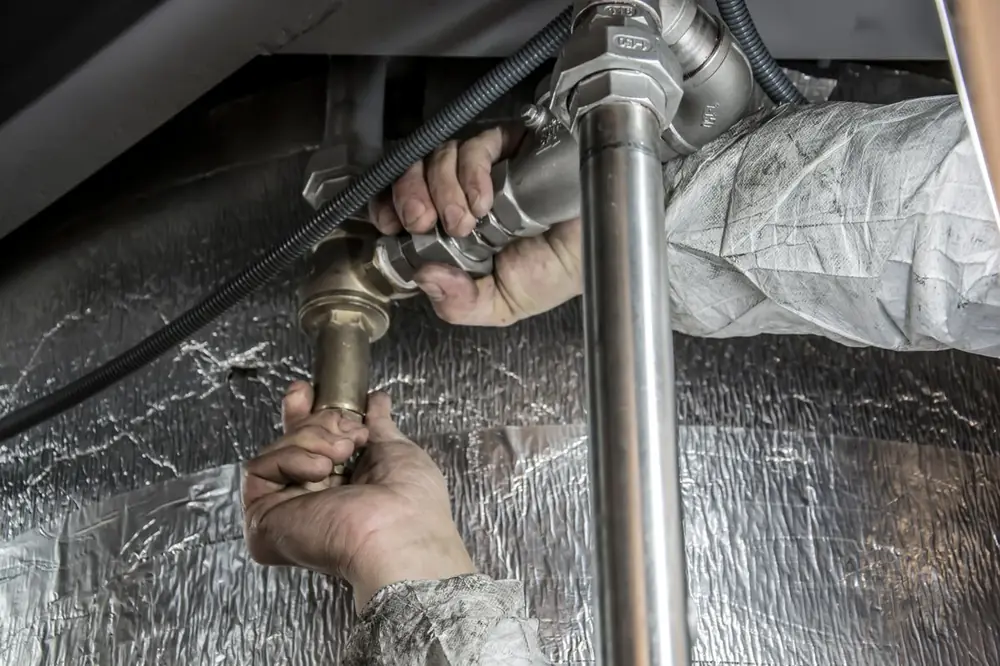
A careful provider does not dig up a yard on the strength of a guess. The standard sequence is: clear the line enough to get flow back, then run a camera through it to see what was actually causing the blockage, which gives a clear view of the pipe wall, the joints, and how far the root intrusion extends.
This is where the two common drain methods divide their labour. Drain cleaning and hydro jetting restore flow by cutting or blasting through the root mass, which gets the house working again. The camera inspection then determines whether the roots were a one-time nuisance or a sign the pipe itself is failing. Both services exist because you usually need the first to make the second possible.
Your repair options, from cutting to trenchless replacement
Once the camera has shown the situation, the options sit on a spectrum from managing the roots to removing the pipe that lets them in:
- Cutting the roots out. A root-cutting head on a cable or a hydro jetter clears the mat and restores full flow. This is the fastest and least disruptive fix, but it is maintenance, not repair: roots grow back, and repeated cutting of a sound pipe with a small intrusion gets expensive as a routine.
- Spot repair. If the camera shows roots entering at one or two specific joints and the rest of the line is sound, the provider excavates just that section, replaces it, and backfills.
- Trenchless relining. A resin-soaked liner is installed inside the existing pipe and cured in place, creating a seamless new pipe within the old one with no joints for roots to enter. It suits lines that are structurally intact but joint-rich, and it avoids digging up the yard.
- Pipe bursting or full replacement. When the line is collapsed, badly offset, or riddled with root entries along its length, the pipe itself has to go. Bursting pulls a new pipe through the old one's path; a traditional open trench replaces it directly. Either way, the result is a continuous fused line with no entry points.
The right choice depends on the pipe's condition, how widespread the intrusion is, and the yard above it, and a licensed provider lays out the trade-offs after seeing the camera footage. The full comparison of methods is on our sewer line repair page, including when trenchless is an option and when it is not.
What to do if you suspect roots in your line
Call (909) 363-3380 and describe the pattern: which drains are affected, how often they have been cleared, and whether any trees stand between the house and the street. Your call is routed to an available local licensed provider who clears the line, runs a camera to locate the intrusion, and gives an upfront estimate for the right long-term fix before any digging begins. Calls are answered 24/7, and may be recorded for quality and lead verification.
Drains keep clogging back up?
Get a camera inspection and a straight answer about what is really in your sewer line.
Call (909) 363-3380Calls answered 24/7. Calls may be recorded for quality and lead verification.