Where Is Your Main Water Shutoff Valve? A Diamond Bar Homeowner's Guide
Your main water shutoff valve is almost always on or near the front of the house, close to where the water line enters from the street: in the curb meter box, on an exterior wall near the hose bib, or just inside the garage. Find it and test it on a calm Saturday, because in a burst pipe emergency the minutes you spend hunting for it are the most expensive minutes of the whole event.
Calls are answered 24/7 and may be recorded for quality and lead verification.
Every home has a single valve that stops all water entering the house, and most homeowners have never touched it. It sits there for years, quietly seizing up, until the night a pipe bursts and suddenly it is the most important handle in the house. Ask any plumber who does emergency work in Diamond Bar and they will tell you the same story: the difference between a repair visit and a restoration project is often just whether the homeowner knew where the shutoff was.
Finding yours takes about fifteen minutes on a calm day. This guide covers where Diamond Bar homes usually hide the main shutoff, how to recognize the two valve types, how to test it without flooding anything, and what to do if it is stuck or broken.
The three places it usually is
Start at the front of the house. The main shutoff lives as close as practical to where the water service enters, and in Diamond Bar that means one of three spots.
1. In the curb meter box at the street
Many Diamond Bar homes have their shutoff inside the water meter box near the curb or sidewalk, a rectangular concrete or plastic lid set in the ground. Lift the lid and you will see the meter plus a valve on the house side of the meter. In older Diamond Point and Pathfinder-era homes, the meter box can be buried under landscaping or soil over the decades, so look for a sunken rectangle in the parkway and clear it. This valve controls everything, and it is the fallback when no interior shutoff exists or works.
2. On an exterior wall near the hose bib
The second common location is right where the water line comes out of the ground and into the house: a valve on the exterior wall near the front hose bib, sometimes low near the foundation line, sometimes up where the line enters the wall. Walk the front of the house looking at where pipes emerge from the ground. In single-story slab homes, this is the most common setup.
3. Just inside the garage
In many Diamond Bar homes, particularly two-story houses and newer builds in Willow Heights and the South Pointe area, the main shutoff is inside the garage on the wall closest to the street, often low near the floor where the line enters through the slab. Look behind storage boxes and along the front wall. Newer homes may also have it inside a utility closet or near the water heater.
Ball valves versus gate valves: how to tell and how to turn
Once you find the valve, identify which type it is, because they turn differently.
A ball valve has a straight lever handle. When the handle runs parallel to the pipe, the valve is open. Turn the handle a quarter turn so it sits perpendicular to the pipe and the water is off. Ball valves are the good ones: fast, reliable, and usually still workable after years of sitting.
A gate valve has a round wheel handle like an outdoor faucet. Turn it clockwise, multiple full rotations, to close it. Gate valves are the ones in older homes that seize. They fail in two annoying ways: the wheel turns but the gate inside has corroded off, so nothing actually closes; or the wheel will not turn at all. If you have a gate valve as your main shutoff, testing it matters more, and replacing it with a ball valve is one of the cheapest upgrades a provider can do.
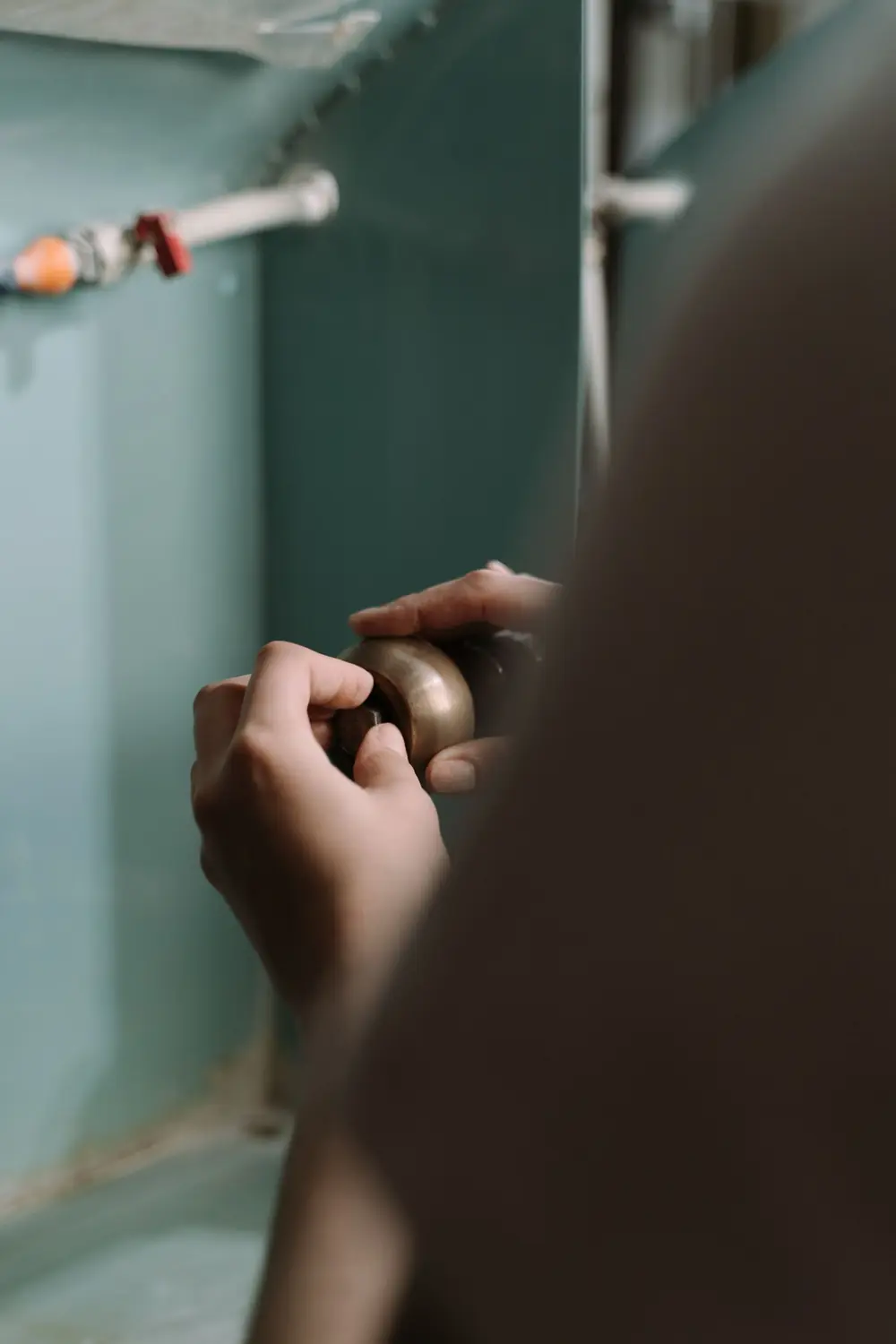
How to test it safely
Testing is simple and should be done during the day, not during an emergency. Turn the valve to the off position, then go inside and open a faucet. If the water slows to a trickle and stops, the valve works and shuts off the whole house. Then turn the valve back on and confirm full flow returns.
A few cautions. If a gate valve wheel barely turns, do not force it with a wrench and all your strength: a snapped valve stem turns a test into an emergency. Gentle pressure only. If the valve closes but water keeps flowing at full force inside, the valve has failed internally and needs replacement. And if you tested the curb meter box valve, make sure you are turning the house-side valve, not anything on the city side of the meter; the city side is the water company's equipment.
If the valve is stuck or broken, do not leave it for later. A provider can replace a main shutoff in a single visit, and it is inexpensive compared to what a working shutoff saves. This is also worth handling before a vacation: turn the main off when you leave town for more than a couple of days, and you eliminate the biggest risk of coming home to a flooded house.
The valves inside your home you should also know
The main shutoff is the master switch, but local valves give you finer control. Know these too: the oval-handled supply valves behind each toilet, the shutoff valves under each sink, the valves at the washing machine hoses, and the cold water inlet valve on the water heater. A burst washing machine hose is one of the most common home floods, and turning the two small valves at the washer stops it in seconds without touching the main. Washing machine hoses themselves should be checked yearly and replaced on a schedule, since rubber hoses are a leading cause of indoor flooding.
Label it and tell the household
Finding the valve is only half the job. Tie a bright tag on it or paint a small arrow, and make sure every adult in the home knows where it is and how it turns. In an emergency, the person home alone may be a teenager or a visiting relative, and a labeled valve they have been shown once beats a perfect memory of an unmarked one. Walk through it together the same day you test it. While you are at it, note the curb meter box location too, as the backup plan.
What to do if you genuinely cannot find one
Some very old homes have a shutoff buried behind drywall from a long-ago remodel, or the only working valve is at the street. If you have searched all three usual spots and found nothing, call (909) 363-3380 and ask a provider to locate it during a daytime visit. They can trace the line, install a new accessible shutoff where one is missing, and test it on the spot. Our emergency plumbing page explains how after-hours calls work if you ever need one, but a located, labeled, tested shutoff is the thing that keeps most emergencies small.
Ten minutes on a Saturday. That is all it takes to turn the most panicked moment in homeownership into a controlled one. Go find yours.
Shutoff stuck, broken, or missing?
Get matched with a licensed local provider who can replace or install a main shutoff valve in one visit.
Call (909) 363-3380Calls answered 24/7. Calls may be recorded for quality and lead verification.