Why Your Kitchen Sink Keeps Clogging
A kitchen sink that clogs again and again usually has one of three causes: grease and food waste slowly coating the inside of the drain line, a garbage disposal being asked to handle things it should not, or an older, narrower drain line that has been accumulating buildup for years. If the same sink clogs more than twice a year, the problem is probably deeper than the trap, and a camera inspection will show what snaking keeps missing.
Calls are answered 24/7 and may be recorded for quality and lead verification.
The plunger works, the sink drains, everyone forgets about it, and three months later the water is rising again. A repeat kitchen clog is one of the most common calls in Diamond Bar, and it is almost never random. Drain lines remember everything you put in them, and in the city's older tracts, those lines have been remembering for fifty years. Understanding why the same sink keeps clogging is the difference between fixing it once and living with it forever.
Cause one: grease, the slow killer
Grease is the number one cause of kitchen drain clogs, and the tricky part is that it causes no problem at all on the day you pour it. Liquid cooking oil, bacon fat, butter, and even the greasy rinse water from a frying pan go down the drain as liquids and then cool and solidify inside the pipe. Layer by layer, over months and years, the grease coats the inner walls of the line and narrows it. Food particles that would have washed through a clean pipe now catch on the sticky coating. The line gets slower and slower until one ordinary dinner's worth of dishwater is more than it can pass.
Hot water does not fix this, despite what many people believe. Running hot water just pushes the grease further down the line before it cools and sets, which means the clog forms deeper, where it is harder to reach. The only thing that actually removes a grease coating is mechanical cleaning: a professional drain cleaning with a snake or a hydro jet, which scrubs the pipe walls back to their original diameter. Our comparison of hydro jetting versus snaking explains which method suits a grease-clogged line.
Prevention is simple but it has to be consistent: never pour fats, oils, or grease down the sink. Wipe pans with a paper towel before washing, and collect used cooking oil in a container for the trash. In a busy kitchen this takes an extra thirty seconds, and it is the single highest-value plumbing habit in the house.
Cause two: the garbage disposal is not a trash can
The disposal is designed to grind small food scraps that wash off dishes, not to process meals. The things that jam it or clog the line downstream are remarkably consistent: coffee grounds, which turn into a dense sludge; starchy foods like rice, pasta, and potato peels, which swell with water and form a paste; fibrous foods like celery and artichokes, whose strings wrap the grinding mechanism; eggshells, which the disposal turns into grit that settles in the trap; and bones or pits, which dull the impellers. Any of these can jam the unit itself, and the starchy, pasty ones can clog the line beyond it.
Good disposal habits: run cold water before, during, and for fifteen seconds after grinding, because cold water keeps fats solid so the disposal can chop them instead of letting them melt into the line. Feed waste in small amounts rather than all at once. And if the disposal hums but does not spin, that is usually a jammed flywheel or a tripped reset button, not a dead unit; our guide to fixture repair covers when a disposal is worth saving and when it is simply done.
Cause three: older drain lines with less room for error
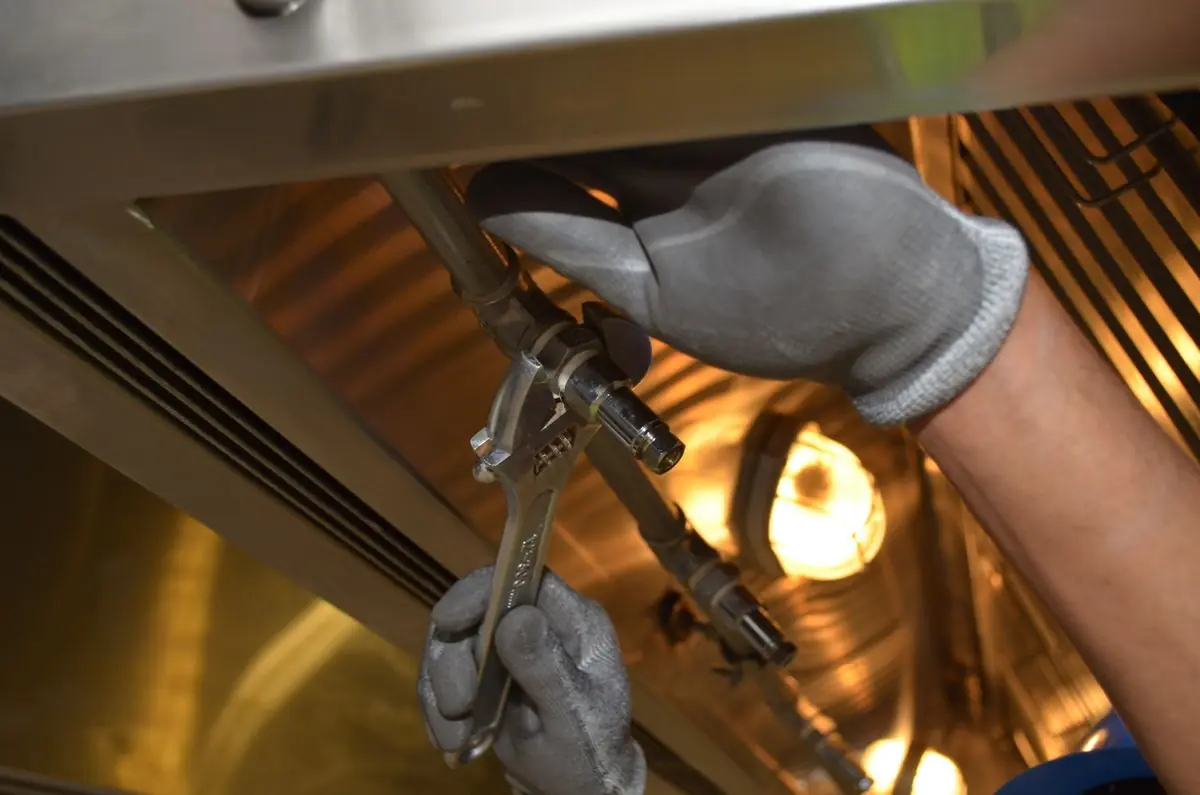
This is the Diamond Bar factor. Kitchens in the 1960s and 70s tracts in Diamond Point, along Pathfinder Road, and in parts of The Country were built with drain lines that are narrower than modern standards, and in some cases with galvanized steel pipe that has been corroding from the inside for decades. A line that started at a full two inches of open diameter may now have an inch or less of actual flow space, with rough, pitted walls that grab everything passing through. In those lines, a perfectly normal amount of cooking grease or food waste clogs a pipe that has nothing left to give.
There is no habit change that fixes a pipe this far gone. Snaking clears the immediate clog, but the rough, narrowed line reclogs quickly, which is exactly the pattern homeowners describe: fixed in an hour, clogged again in a few months. The honest long-term answers are a thorough cleaning that restores the line's diameter, or replacing the bad section, which is a straightforward pipe repair when the rest of the system is sound. A camera inspection settles the question in one visit by showing the pipe's actual condition on video.
When a repeat clog means the problem is deeper
Pay attention to the pattern, because the location of the pattern tells you where the problem lives. If only the kitchen sink is slow and the rest of the house drains fine, the blockage is in the kitchen branch line. But if the kitchen sink backs up when the dishwasher runs, if the bathroom fixtures are also slowing down, or if you hear gurgling from other drains when the kitchen sink empties, the problem is further down: in the main drain or the sewer line itself. A kitchen clog that coincides with a bad smell from the floor drain or yard is a sewer-line warning, not a kitchen warning. Those are the signs of a main sewer line clogging, and catching it early is far cheaper than catching it late.
What not to do
The two most common mistakes both make things worse. The first is reaching for a chemical drain cleaner. Caustic cleaners rarely dissolve a real clog, they sit in the pipe and corrode metal lines, they create a burn hazard for anyone who later opens the drain, and they do nothing about grease coating or a narrowed line. The second is ignoring the pattern: clearing the same clog a third time without asking why it keeps forming. Repeat clogs are a symptom with a cause, and every repeat visit costs the same as the one before it while the underlying line keeps getting worse.
What actually fixes it for good
Start with habits: keep grease out of the sink, run the disposal correctly, and scrape plates before rinsing. If the clogs continue anyway, the next step is a professional cleaning that matches the problem: a snake for a simple soft blockage, hydro jetting for grease coating and heavy buildup. And if cleaning does not hold, the step after that is a camera inspection to see the line itself. Most repeat kitchen clogs in Diamond Bar resolve at one of these three levels, and the homeowners who get to the right level fastest are the ones who stop describing the problem as bad luck. Call (909) 363-3380 and describe the pattern: how often it clogs, what you have tried, and whether other fixtures are affected. A licensed local provider can match the fix to the cause on the first visit.
Same clog, third time this year?
Get matched with a licensed local provider who can clear it properly and show you what is causing it.
Call (909) 363-3380Calls answered 24/7. Calls may be recorded for quality and lead verification.